
How Journaling Changed My Relationship with Myself
For years, I lived mostly in my head—overthinking, worrying, criticizing myself for not being “enough.” My mind felt like a noisy room I couldn’t escape, filled with endless lists of things to fix about myself.
Then, I started journaling. Not the kind with fancy prompts or perfect handwriting—just me, a notebook, and a pen. At first, it felt awkward, like talking to a stranger. But over time, something shifted.
Journaling became more than writing words on paper—it became a conversation with myself, one I didn’t even know I needed. It softened the way I spoke to myself, helped me understand my emotions, and slowly rebuilt the trust I had lost with my own heart.
Here’s how journaling changed my relationship with myself—and why it might change yours too.

I Learned to Listen to Myself
Before journaling, I rarely paused to ask, “How am I really feeling?” I pushed through my days, ignoring my emotions until they burst out as anxiety or exhaustion.
Writing forced me to slow down. Seeing my thoughts on paper felt like holding up a mirror to my mind. For the first time, I wasn’t just feeling emotions; I was understanding them.
Sometimes I’d write a single sentence—“I feel tired and I don’t know why.” But the more I wrote, the clearer things became. Patterns emerged. I started noticing what drained me, what made me happy, and what I truly needed.
One of my mentors once said, “The act of writing slows the chaos of the mind to a pace the heart can understand.” And that’s exactly what journaling did for me—it gave me space to listen.
I Learned to Be Kinder to Myself
I didn’t realize how harsh my inner voice had become until I saw it on paper. My journal showed me how often I criticized myself, how quickly I dismissed my own efforts.
At first, my pages were filled with frustration:
“I should have done better.”
“Why can’t I just get it right?”
But something changed as I kept writing. Over time, I started responding to myself the way I would to a friend. Instead of writing, “I’m such a failure,” I began to write, “I’m trying, and that’s enough for today.”
That shift didn’t happen overnight, but with every gentle sentence, I was teaching myself compassion. My journal became a safe place where I could be imperfect, messy, and still worthy.
I Learned to Celebrate Small Wins
When life feels overwhelming, it’s easy to forget how far you’ve come. But my journal reminded me.
Flipping through old pages, I could see how much I’d grown—how something that once consumed me no longer did, how problems I thought would never end eventually softened.
Even writing small victories like, “I said no when I wanted to,” or “I rested without guilt today,” built self-trust. I realized healing wasn’t about giant breakthroughs; it was about these tiny, daily moments that I might have overlooked without writing them down.
I Learned to Trust Myself Again
Journaling rebuilt a relationship I didn’t even know I had broken—the relationship with myself.
Each time I showed up on the page, even when I didn’t feel like it, I was sending myself a message: “You matter. Your thoughts matter. Your feelings deserve space.”
Slowly, I stopped doubting my own voice so much. I started making choices that felt right for me, even if they didn’t please everyone. Journaling reminded me that I know myself better than anyone else—and that’s something I had forgotten for a long time.
Simple Ways to Start Journaling
If journaling feels intimidating, start small. You don’t need fancy prompts or perfect grammar—just honesty. Here’s what helped me:
- Write Without Rules – Don’t worry about making sense. Just write what’s on your mind, even if it’s messy.
- Ask Gentle Questions – Try: “What am I feeling right now?” or “What do I need today?”
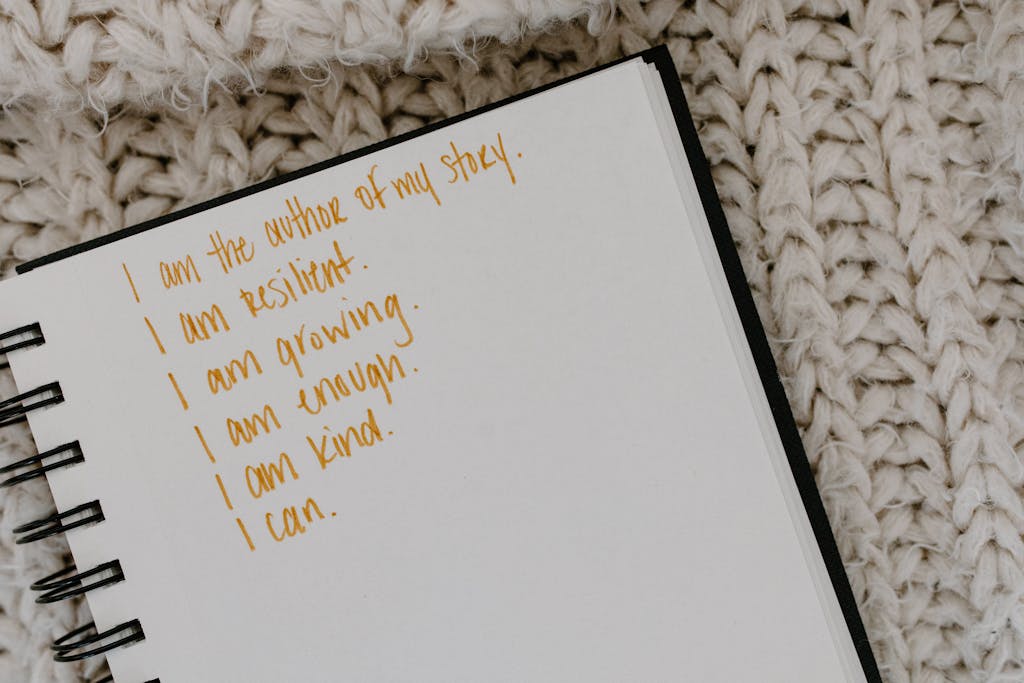
- Write a Soft Reminder to Yourself – End each entry with a kind sentence, like: “I’m doing the best I can, and that’s enough.”
- Be Consistent, Not Perfect – A few lines every other day are enough to feel the shift.
Final Words
Journaling didn’t magically solve all my problems, but it changed the way I faced them. It turned my inner voice from a critic into a friend, helped me notice my own growth, and reminded me that I’m allowed to take up space—even in my own heart.
If you’ve been feeling disconnected from yourself, try picking up a pen. Write anything, even if it feels awkward at first. Your first words might be clumsy, but they’ll lead you somewhere softer, somewhere truer.
Because sometimes, the most healing conversation you’ll ever have is the one you have with yourself—on paper.